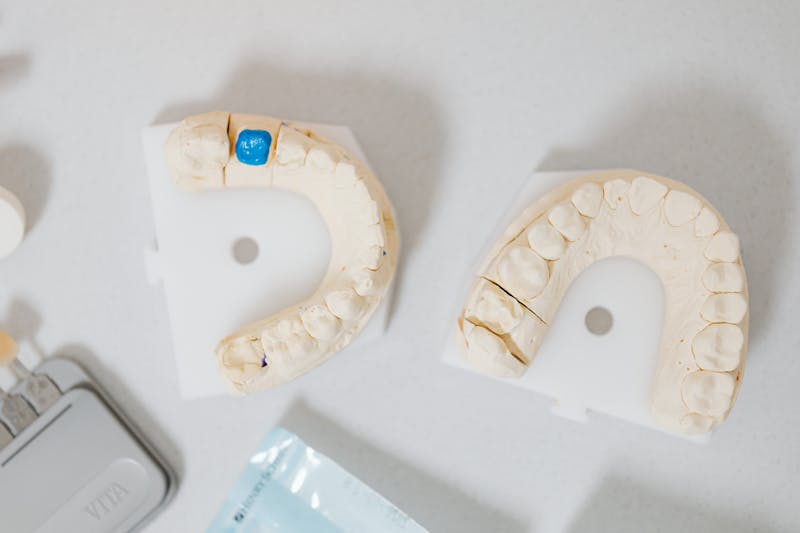
What Is a Dental Crown?
A dental crown is a custom-made cap that covers a damaged, decayed, or weakened tooth. It restores the tooth's shape, strength, and appearance. Modern crowns are made from porcelain or zirconia and look identical to natural teeth.
You might need a crown if you have:
- A large cavity too big for a filling
- A cracked or fractured tooth
- A tooth after root canal treatment
- A worn-down or misshapen tooth
- An implant that needs a restoration
What Is a Dental Bridge?
A bridge replaces one or more missing teeth by anchoring artificial teeth to the natural teeth on either side. It "bridges" the gap.
Types of bridges:
- Traditional bridge — crowns on both adjacent teeth with a false tooth between
- Cantilever bridge — anchored on one side only
- Implant-supported bridge — anchored to dental implants (strongest option)
What Does the Procedure Involve?
Crown Procedure (2 visits)
- Visit 1: Tooth is prepared (shaped down), 3D scan taken, temporary crown placed
- Lab fabrication: Custom crown is milled (1–2 weeks)
- Visit 2: Permanent crown is cemented in place
Bridge Procedure (2–3 visits)
Similar to crowns, but the anchor teeth on both sides are prepared.
Cost & Longevity
| Restoration | Average Cost | Lifespan |
|---|---|---|
| Porcelain crown | $1,000–$1,500 | 10–15 years |
| Zirconia crown | $1,200–$1,800 | 15–20+ years |
| 3-unit bridge | $2,500–$4,500 | 10–15 years |
| Implant + crown | $3,000–$5,000 | 20+ years |
Crown vs. Implant: How to Decide
Choose a crown if: The tooth is damaged but the root is healthy. A crown saves the natural tooth.
Choose an implant if: The tooth is missing or must be extracted. An implant replaces the entire tooth without affecting neighbors.
At Yamaguchi Family Dentistry in Tumwater, WA, we use 3D scanning for perfectly fitted crowns — no messy impressions. Schedule your consultation today.
Book AppointmentYamaguchi Family Dentistry · (360) 943-9480 · Tumwater, WA